Weight Limit Regulations: The Legal Dangers of Overloaded 18-Wheelers
What is the legal weight limit for an 18-wheeler in the USA? Under federal law, the maximum Gross Vehicle Weight (GVW) for a commercial truck is 80,000 pounds. Additionally, drivers must comply with specific axle limits: 20,000 lbs for a single axle and 34,000 lbs for a tandem axle group. Exceeding any of these, even if the total weight is under 80,000 lbs, is a legal violation.
Every day, millions of commercial trucks move goods across highways, keeping supply chains alive and economies running. Among them, 18-wheelers carry some of the heaviest loads on the road. While these massive vehicles are designed for strength and endurance, they are still governed by strict weight limits for one critical reason: safety.
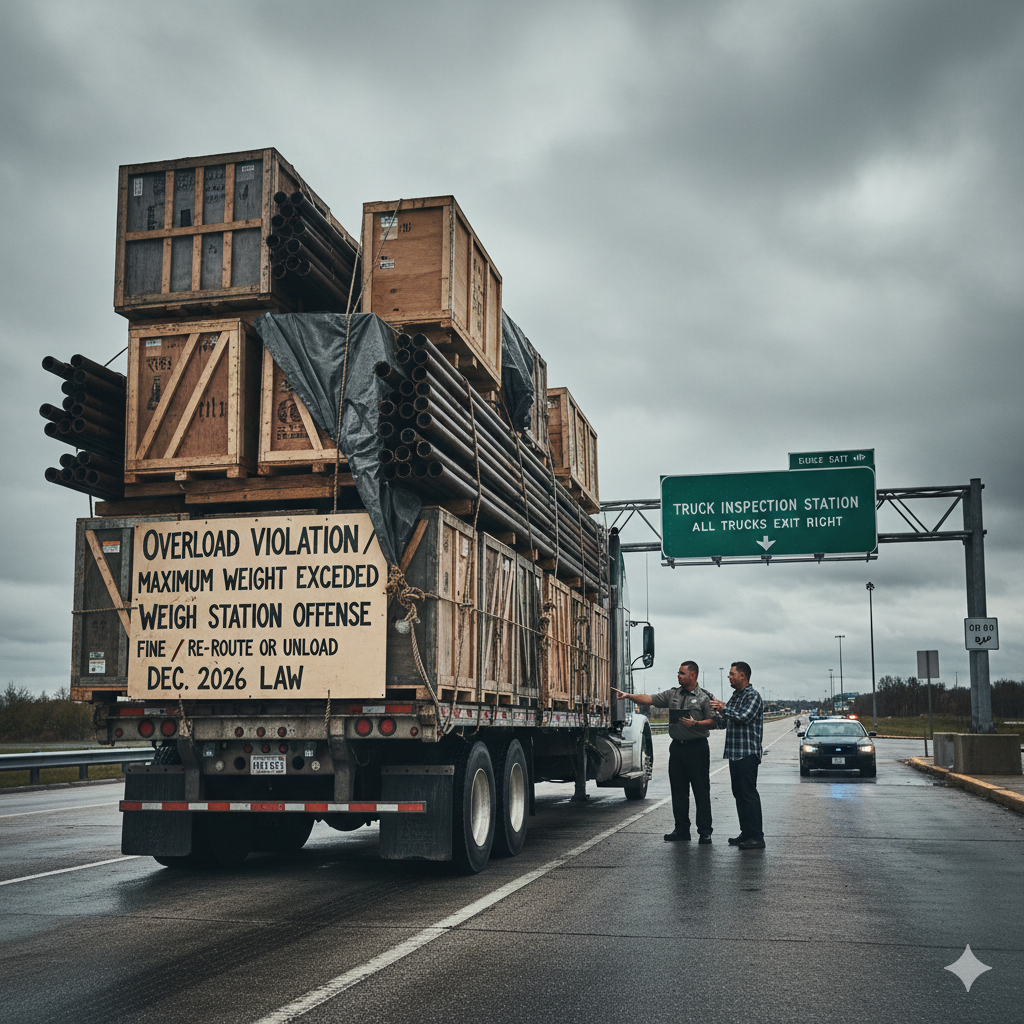
When an 18-wheeler exceeds its legal weight, it becomes far more than a traffic violation—it turns into a serious public safety risk. Overloaded trucks are harder to control, take longer to stop, damage road infrastructure, and significantly increase the likelihood of catastrophic accidents. For drivers, carriers, and fleet operators, ignoring weight regulations can lead to severe legal consequences, financial penalties, and even criminal liability.
In this in-depth guide, we’ll explore what weight limit regulations are, why they exist, how they’re enforced, and the legal dangers associated with overloaded 18-wheelers. We’ll also look at who is responsible, what penalties apply, and how companies can stay compliant.
Understanding Federal Weight Limit Regulations
In the United States, weight limits for commercial vehicles are governed primarily by the Federal Bridge Formula, enforced by the Federal Highway Administration (FHWA) and adopted by most states.
The general federal limits for an 18-wheeler are:
- 80,000 pounds – Maximum gross vehicle weight (truck + trailer + cargo)
- 20,000 pounds – Maximum weight on a single axle
- 34,000 pounds – Maximum weight on a tandem axle
These limits are designed to:
- Protect bridges and roadways from structural damage
- Ensure vehicles can brake and maneuver safely
- Reduce tire blowouts and mechanical failures
- Prevent rollovers and jackknife accidents
While some states allow higher limits under special permits, these exceptions are tightly controlled and often restricted to specific routes, times, or cargo types.
Why Overloaded 18-Wheelers Are So Dangerous
Exceeding weight limits changes how a truck behaves on the road. Even a few thousand extra pounds can dramatically impact performance.
1. Longer Stopping Distances
An overloaded truck requires significantly more distance to come to a complete stop. In emergency situations, this delay can be fatal—especially in high-traffic areas or during poor weather conditions.
2. Reduced Vehicle Control
Excess weight affects:
- Steering response
- Stability in curves
- Lane-change performance
Overloaded trucks are more prone to rollovers, particularly on ramps and winding roads.
3. Increased Mechanical Failure
Overweight loads place stress on:
- Braking systems
- Tires
- Suspension components
- Axles and frames
This can lead to blowouts, brake failure, or structural breakdowns at highway speeds.
4. Infrastructure Damage
Roads and bridges are engineered with weight limits in mind. Overloaded trucks accelerate wear and tear, causing:
- Cracks and potholes
- Bridge fatigue
- Premature road failure
Taxpayers ultimately bear the cost of this damage.
Why Overloading Happens
Most overweight violations are not the result of malicious intent. They stem from systemic issues: inaccurate paperwork, rushed loading procedures, miscommunication, or unrealistic delivery demands. In fast-paced operations, cargo weights may be estimated rather than verified. Drivers may be handed sealed trailers with no practical way to confirm what’s inside. Dispatchers may be under pressure to meet deadlines, and drivers may fear retaliation if they refuse a load. Without proper systems in place, small errors compound. A few extra pallets here, an incorrect manifest there, and suddenly a truck is thousands of pounds over the limit.
These problems are preventable. They persist mainly in environments where speed is valued more than safety.
Legal Consequences of Overloaded 18-Wheelers
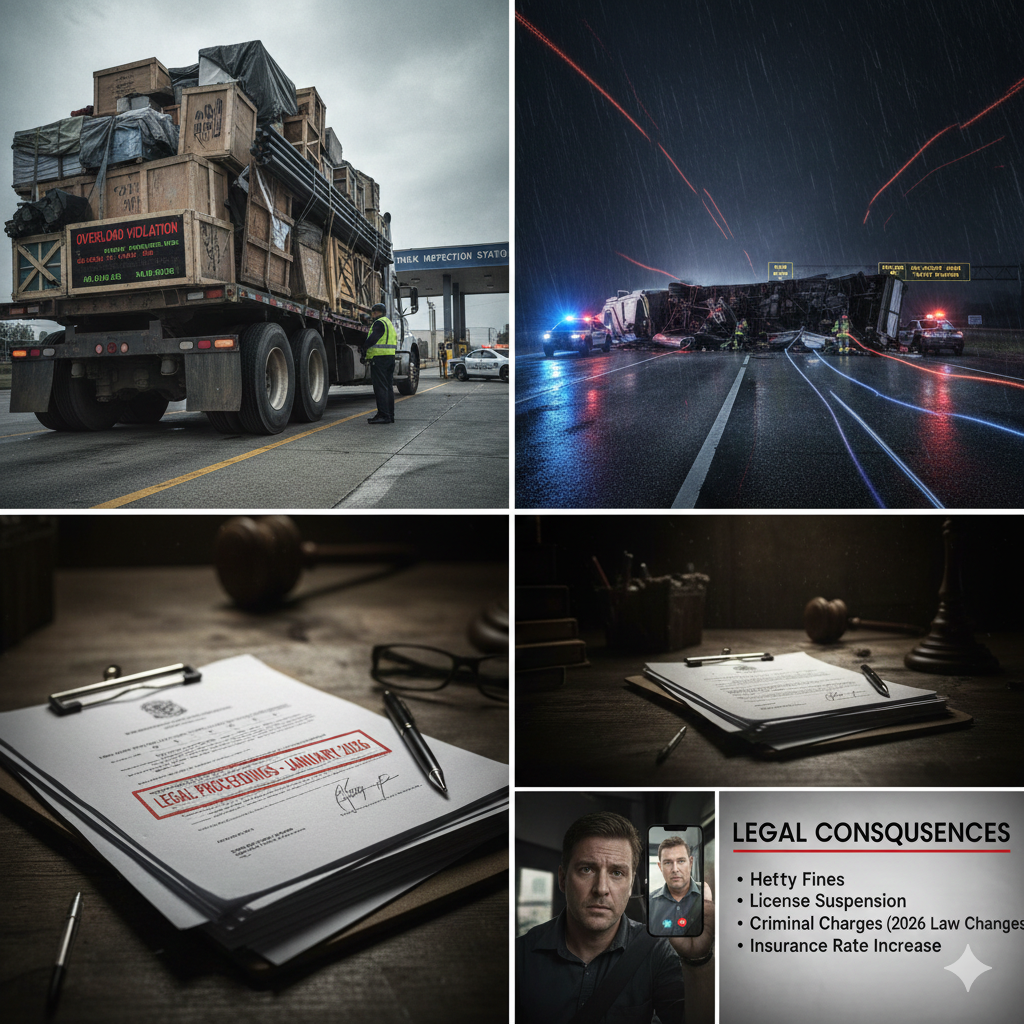
Overweight violations go far beyond a simple ticket. The legal consequences can be severe and long-lasting.
1. Fines and Penalties
Fines vary by state and by how much the truck exceeds the limit. Some jurisdictions charge:
- A flat rate per pound over the limit
- Escalating penalties for larger excess weights
- Additional fees for repeat violations
In extreme cases, fines can reach thousands of dollars per incident.
2. Out-of-Service Orders
If a truck is dangerously overloaded, authorities may issue an out-of-service order, preventing it from continuing its trip until the weight is reduced.
This results in:
- Delivery delays
- Lost contracts
- Additional labor and equipment costs
- Customer dissatisfaction
For time-sensitive freight, these delays can be devastating.
3. Increased Liability After Accidents
If an overloaded 18-wheeler is involved in an accident, the legal exposure multiplies.
Plaintiff attorneys may argue that:
- The carrier acted negligently
- The driver knowingly operated an unsafe vehicle
- The company prioritized profit over safety
Overweight conditions can be used as evidence of:
- Reckless behavior
- Regulatory non-compliance
- Systemic safety failures
This can lead to:
- Larger settlements
- Higher jury awards
- Punitive damages
In fatal crashes, criminal charges may even be considered.
4. Impact on CSA Scores and FMCSA Compliance
The Federal Motor Carrier Safety Administration (FMCSA) tracks violations through the Compliance, Safety, Accountability (CSA) program.
Overweight violations can:
- Increase a carrier’s risk profile
- Trigger audits and investigations
- Lead to higher insurance premiums
- Damage business reputation
A poor safety record makes it harder to win contracts, especially with large shippers who demand strict compliance.
Who Bears Responsibility
While drivers are often the ones stopped at weigh stations, responsibility for overloading rarely rests on one person alone. Modern supply chains involve drivers, carriers, shippers, warehouses, and third-party logistics providers.
If a driver knowingly operates an overweight truck, they may be cited. But if a company encourages or pressures drivers to exceed limits, the carrier may share liability. If a shipper misrepresents the weight of cargo or loads it improperly, they may also be held accountable, particularly in civil litigation.
Courts increasingly examine the entire chain of decision-making. They ask who knew the weight, who had the ability to correct it, and who allowed the truck to roll anyway. In serious cases, liability can extend far beyond the cab.
This broader view reflects a growing recognition that safety is a shared responsibility.
Common Causes of Overloading
Understanding why overloading happens helps prevent it.
- Inaccurate cargo documentation
- Poor communication between shipper and carrier
- Pressure to meet tight deadlines
- Lack of onboard weight sensors
- Improper load distribution
- Inadequate training
Many violations are preventable with better systems and accountability.
How Carriers Can Stay Compliant
Avoiding overweight violations isn’t just about following the law—it’s about building a culture of safety.
Best Practices for Compliance
- Use Accurate Weighing Systems
- Install onboard scales
- Verify weights before departure
- Train Drivers Thoroughly
- Teach weight regulations
- Emphasize load distribution
- Encourage drivers to refuse unsafe loads
- Audit Shippers and Loaders
- Verify cargo weights
- Require accurate documentation
- Hold partners accountable
- Plan Routes Carefully
- Know state-specific limits
- Understand permit requirements
- Establish Clear Policies
- Zero tolerance for intentional overloading
- Document safety procedures
- Protect drivers from retaliation
A proactive approach reduces risk, improves safety ratings, and protects long-term profitability.
The Real Cost of Overloading
While exceeding weight limits may seem like a way to increase efficiency, the hidden costs quickly outweigh any short-term gain.
| Short-Term Benefit | Long-Term Cost |
| Fewer trips | Higher fines |
| Faster delivery | Increased accidents |
| Lower fuel cost per load | Equipment damage |
| Higher profit per run | Legal liability |
| Competitive edge | Reputation loss |
One serious accident involving an overloaded truck can erase years of profit and permanently damage a company’s brand.
Conclusion
Weight limit regulations exist for a reason. They protect drivers, motorists, infrastructure, and the companies that depend on safe transportation. Overloaded 18-wheelers don’t just break the law—they put lives at risk.
For drivers, understanding and respecting weight limits is part of professional responsibility. For carriers, compliance is a legal and ethical obligation. And for the public, these rules are a crucial safeguard on busy highways.
In an industry where margins are tight and schedules are demanding, it can be tempting to push boundaries. But when it comes to weight limits, cutting corners can lead to devastating consequences.
Safety isn’t just a regulation—it’s a commitment.
Managing your time is just as important as managing your weight—check out our guide on the 30-minute break rule
FAQs
Q: What is the maximum legal weight for an 18-wheeler?
In most states, the federal limit is 80,000 pounds gross vehicle weight, with axle limits of 20,000 pounds (single) and 34,000 pounds (tandem).
Q: Can a truck legally exceed 80,000 pounds?
Yes, but only with special permits and on approved routes. These permits are tightly regulated.
Q: Who gets the ticket if a truck is overweight?
It depends on state law, but citations may be issued to the driver, the carrier, or both.
Q: Does being slightly overweight really matter?
Yes. Even a small excess can affect braking, stability, and mechanical reliability—especially at highway speeds.
Q: How can drivers protect themselves?
Drivers should verify weights, understand regulations, document concerns, and refuse unsafe loads when necessary.
The content published on this blog is intended solely for informational and guidance purposes. We do not offer, promote, or provide any services through this website.