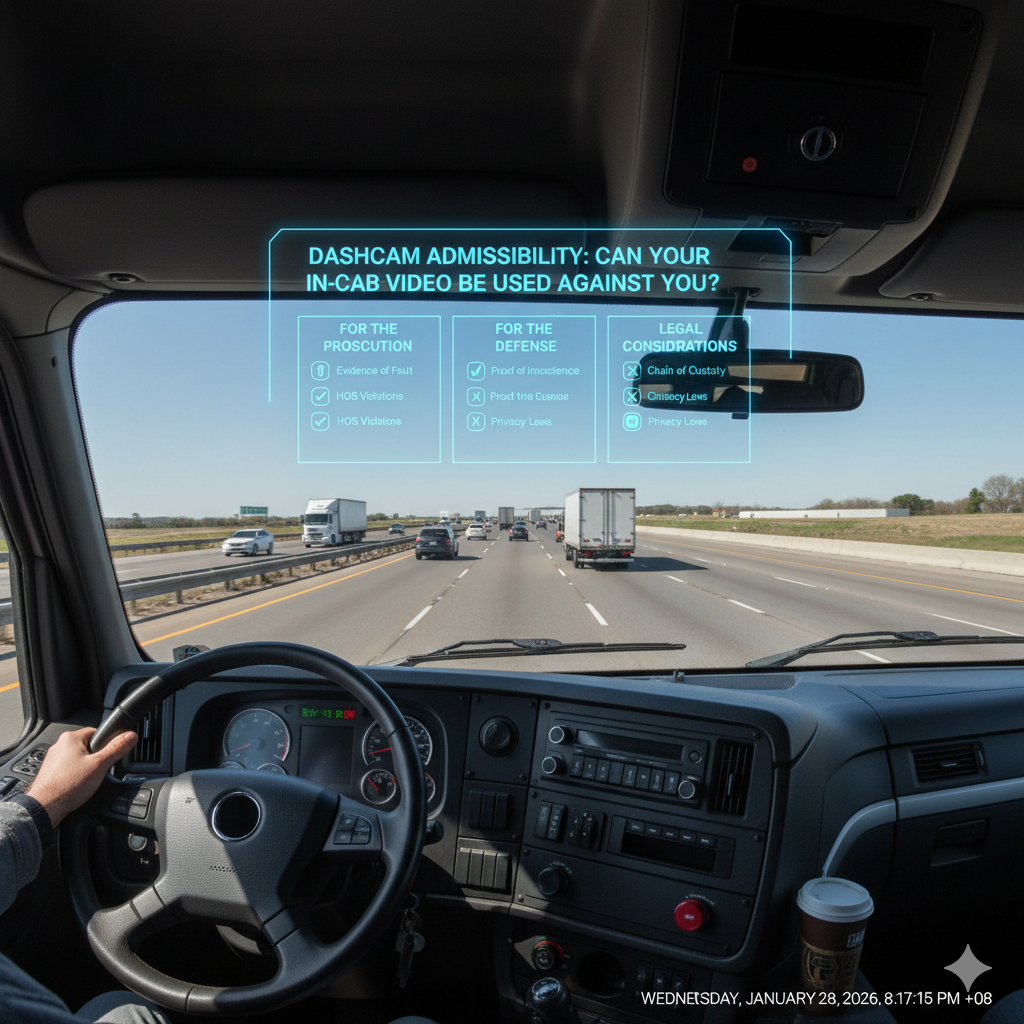
An Electronic Logging Device (ELD) is a federally required electronic device that is installed in the majority of commercial trucks, which logs the hours of service, engine activity, and the driving time of a driver automatically. ELDs directly interface with the engine control unit of the vehicle and utilize the GPS technology to monitor the movement of a truck, the distance travelled and the length of time the truck is on the road. This information substitutes the old paperwork logbooks that were incomplete, inaccurate or deliberately manipulated.
What ELDs Do
ELDs are automatic to track the time when a truck is in motion, halts, idles, and closes down. They record the on-duty, off-duty and driving time of the driver without giving the option of recording driving hours manually. This will leave a tamper-free, real-time history of the activity of the driver.
Why FMCSA Requires ELDs
Federal Motor Carrier Safety Administration mandates ELDs to avoid falsification of logs, implement hours-of-service regulations and minimize fatigue crashes. Paper logs prior to ELDs allowed the drivers and companies to conceal unlawful driving.
Which Trucks Must Use ELDs
Interstate commercial trucks have been mandated to install ELDs since the federal mandate became fully operative in December 2017, with only short-haul trucks and older cars being exempted.
What Data Does an ELD Record?
ELDs produce an in-depth computer record of the activity of a truck that is highly useful following an important crash.
Core ELD Data
An ELD continuously records:
- Driving time
- On-duty and off-duty status
- Location data through GPS
- Engine hours
- Vehicle mileage
These records indicate the time at which that truck was moving, the duration during which it was moving and whether the driver was in the right state of mind to be behind the wheel at that time.
Supporting Data
ELDs also record in addition to driving time:
- Time and date stamps of all status changes.
- Speed and motion data
- History of driver logouts and logins.
- Any edits, corrections and annotations.
All changes are recorded forever with the name of the person who made the change and the time he/she made the change.
The Importance of This Data after a Crash
Following a semi-truck crash, ELD information may confirm that the motorist was either tired, operating in violation of the law, or being pressured by a trucking company to drive past federal safety limits. It also reveals log tampering which is usually crucial in demonstrations of negligence and corporate malpractices in lawsuits.
How ELD Data Reveals Hours-of-Service Violations
Electronic Logging Devices capture all the minutes a truck is in motion and as such, it is easy to identify the infractions of federal driving limits. The usual violations of HOS in ELD data are:
- Exceeding the 11-hour limit of required rest.
- Working longer than 14 hours on duty.
- Missing 30 minutes of rest periods that are compulsory.
- Making use of counterfeit sleeper-berth time to remain on the road.
In case of a crash, investigators will be able to compare the ELD timeline with FMCSA regulations and define whether the driver was working unlawfully.

How Drivers Try to Manipulate Logs
Even with the security level of ELDs, there are always drivers and carriers who aim to conceal violations by:
- Making improper log edits
- Categorizing driving time as off-duty.
- Recording out of duty whilst the truck is in motion.
Nevertheless, all edits leave a digital record of the person who made the edits and when.
Why ELDs Expose the Truth
ELDs are attached to the engine and GPS of the truck. In case the vehicle is in motion, it will be automatically recorded by the system. This renders it almost impossible to hide illegal driving since raw engine and position data cannot be deleted or rewritten even when the vehicle driver modifies a log entry.
How Lawyers Obtain ELD Data After a Truck Accident
ELD systems do not archive data permanently. Records are overwritten or deleted by many carriers after several months. To avoid it, truck accident lawyers will send an instant preservation (spoliation) letter to the trucking company. This is legally obliging them to maintain ELD files, GPS records, dispatch records and onboard computer records intact.
Subpoenas & Court Orders
In case of non-cooperation of a trucking company, lawyers may make the ELD data be released with the help of subpoenas and court orders. The records are known as very important safety evidence and have been identified by the courts as such, and they often force the production of the records.
Third-Party ELD Providers
Some outside ELD vendors used by most fleets include Verizon connect, Samsara, Motive (formerly Keep Trucking), Omnitracs, and Geotab. Such companies have their own cloud backups, which means that attorneys could access the original data even in the event that the trucking company tries to conceal or alter records.
Read this also Commercial Vehicle Safety Alliance (CVSA) for roadside inspection standards.
The use of ELD Data as Court Evidence.
ELD data reveals precisely the duration of time a driver spent behind the wheel and whether he took necessary rest intervals. The lawyers will be able to prove that the driver was probably fatigued at the moment of the crash when logs show that he was making excessive moves or he did not have a break at all, which is a very powerful factor in the case of truck accidents.
Proving Negligence
Federal Safety laws are FMCSA Hours-of-Service rules. In most states, when ELD data is used to indicate that these rules were breached, it creates negligence per se, i.e. the breach of the rule in itself constitutes legal fault without the need to provide any other evidence that the defendant acted carelessly.
Proving Company Liability
ELD information is not restricted to the driver. It also reveals dispatch schedules, delivery dates and company stress that compels drivers to break safety regulations. In cases where there is a record that a carrier permitted or promoted illegal driving, the trucking company may be directly liable to unsafe operations- most of the time resulting in bigger settlements and punitive damages.
Common ELD Violations Found in Semi-Truck Crash Cases
Truck accident investigations frequently uncover one or more forms of ELD misconduct that reveal illegal or unsafe driving. The most common violations include:
- Edited log entries that attempt to reduce recorded driving time
- Missing or erased data during critical hours before a crash
- Disconnected ELD devices while the truck is moving
- Driving while logged as off-duty
- Inconsistent timestamps between ELD, GPS, and fuel records
These red flags often indicate that a driver or carrier was trying to hide hours-of-service violations or avoid liability.
What These Mean Legally
From a legal standpoint, these violations suggest intentional non-compliance with federal safety law. Altered or missing ELD data can support claims of negligence, spoliation of evidence, and even fraud. Courts and juries view log manipulation as proof that the trucking company had something to hide, significantly strengthening the injured victim’s case.
How ELD Evidence Increases Truck Accident Settlements
ELD records provide hard, objective proof of how a truck was operated. Unlike witness statements or driver testimony, ELD data cannot be explained away. It eliminates credibility disputes by showing exactly when the truck moved, stopped, or violated federal safety rules.
Punitive Damage Exposure
Punitive damage is exposed to the trucking companies when the ELD data shows intentional breach of safety, e.g., compelling drivers to work more than the stipulated hours or altering logs. These harms are designed to provide punishment to irresponsible conduct and may significantly inflate the worth of a case.
What Accident Victims Should Do to Protect ELD Evidence
ELD data may be lost or overwritten within a short period of time when a semi-truck crash happens. A truck accident lawyer should be contacted by the victims at once in order to take legal measures to preserve this evidence. A lawyer will write an official ELD preservation request to the trucking company, which will legally bind them to hold all electronic documents.
The other important thing is that one must work quickly before data is destroyed by automated systems. Attorneys will insist on driver records, GPS reports, dispatch notes and onboard computer records in order to maintain evidence of the pre-crash operation of the truck.
Also Read This “ELD Mandate 2026 Updates“ post (e.g., “Ensuring your device is on the 2026 approved list is the first step in protecting yourself from a data-driven lawsuit.”).
FAQs
Can ELD data be erased?
While ELD systems retain raw data, some records can be overwritten over time. That is why preservation letters are critical after a crash.
How long is ELD data stored?
FMCSA mandates that carriers maintain hours-of-service records at least six months, however, some of the systems retain data over more time.
Can drivers edit ELD logs?
Drivers are allowed to make minor amendments, although all the changes are stored permanently and could not be deleted.
Are ELDs required by law?
Yes. Under the FMCSA regulations, the majority of interstate commercial trucks are bound by law to use ELDs.
Can ELD information be used in a court of law?
Yes. ELD data, as an electronic piece of evidence, is regularly accepted in courts as credible evidence in truck accidents.
Note: The content published on this blog is intended solely for informational and guidance purposes. We do not offer, promote, or provide any services through this website.