Determining Vicarious Liability: Is the Driver or the Trucking Company Responsible?
What is vicarious liability in trucking? Vicarious liability (or respondeat superior) is a legal doctrine that holds a trucking company responsible for a driver’s negligence, provided the driver was an employee acting within the “scope of employment.” In 2026, courts are increasingly applying this to independent contractors if the company exerts “significant control” over their routes, tools, or schedules.
The “Respondent Superior” Rule: Let the Master Answer
-
The Definition: Explain that the company benefits from the driver’s work, so they must also bear the risk.
-
The Two-Part Test: 1. Was there an employee-employer relationship? 2. Was the driver “on the clock” and performing job duties?
The issue of truck accidents is very critical on the road not only in terms of the devastating nature of its effects but also in terms of the legal complications that arise. One of the main problems that are involved in most cases of truck accidents is the establishment of vicarious liability. The question is huge: Who will pay for the damages? Is it the trucker or the trucking company that they are working under?
The concept of vicarious liability in the law is crucial in that a particular party is liable to the actions of another; hence, one should learn about vicarious liability in case one is a victim of a truck accident, the driver or a trucking company.
In this blog we will explore the notion of vicarious liability in truck accidents, how the law system establishes the responsibility and the implications of this to all parties involved.
What Is Vicarious Liability?
Vicarious liability should be defined before we embark on discovering whether the driver or the trucking company is liable in an accident eventuality.
Definition of Vicarious Liability
Vicarious Liability is defined as a liability that is inflicted through another person.
Vicarious liability is a legal doctrine that makes another party responsible for the other party particularly where the latter party is acting within the lines of duty. When it comes to a truck accident, it would imply that in the event that a truck driver is involved in an accident in the course of their employment (i.e. driving on behalf of their employer), then the trucking company would be the one to be blamed in the accident regardless of the fact that it is the driver who was the direct cause of the accident.
For example:
- In cases whereby one of the truck drivers is delivering and he or she is in an accident the damages may be blamed on his or her employer.
- Conversely, the trucking company might not be liable where the driver was not on duty or in his own capacity at the incident.
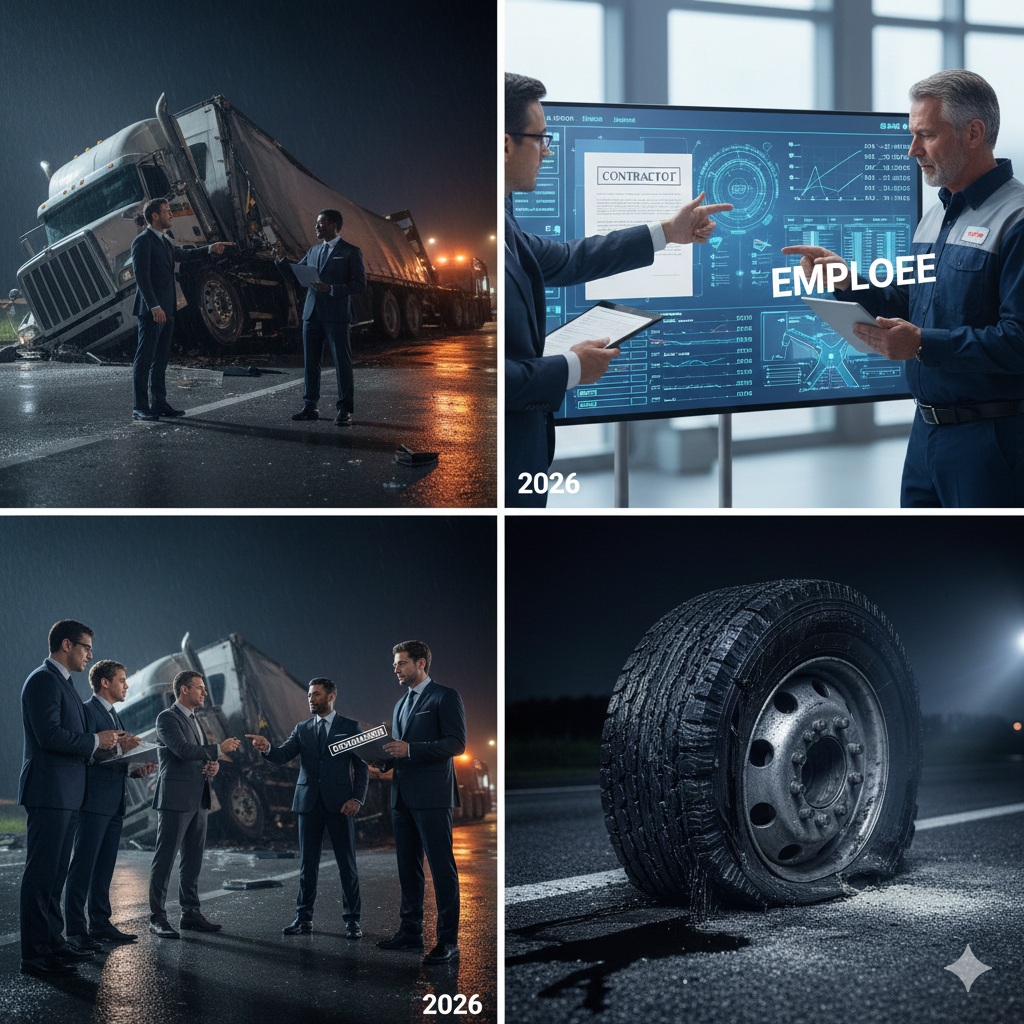
Who Is Responsible for a Truck Accident? Key Factors Determining Responsibility
In the process of establishing liability in an accident involving trucks, a number of important factors are involved. Let’s break these down:
Also check this Cornell Law School’s Legal Information Institute
1. Was the Driver Acting Within the Scope of Employment?
This is the greatest consideration in the determination of the applicability of vicarious liability. The trucking company can be held responsible in case the driver was engaged in something that was related to their work when the accident happened.
Examples of Scope of Employment:
- On a scheduled delivery: In the event that the driver was transporting the goods to one of the clients, and he or she caused an accident, the company might be liable.
- Picking up or dropping off freight: The employer of the driver can be liable to the accidents that occur during this period even though the driver is in transit.
Activities not related to the employment:
- Off duty conduct: When the driver was off duty, and had used the truck to make some personal errands, the trucking company is unlikely to be found liable.
- Stop or detour without authorization: When the driver makes an unsanctioned detour on his/her personal grounds and causes an accident, the company cannot be (held) responsible.
2. Was the Driver Negligent?
In the majority of truck accidents, negligence should be mentioned. In case the actions of the truck driver were reckless, careless or any other thing that violated the laws of traffic, the driver of the truck and the company can be held responsible.
Cases of Driver Negligence:
- Speeding: Exceeding the speed limit under dangerous circumstances.
- Distracted Driving: Telephone use when driving or any other distraction.
- Fatigue: Operating the vehicle when excessively fatigued, or going against FMCSA hours-of-service provisions.
- Improper Training: There could be a possibility that the driver was not properly trained or unqualified which might also make the trucking company liable.
3. The Trainings and Supervisions of the employer
In other instances, the trucking company can be the cause of the accident because of careless selection or poor training of the driver. The company has the responsibility of ensuring that its workforce is capable of operating commercial vehicles safely.
Examples of Employer Negligence:
- Cases of Negligence by the Employer: Hiring of unqualified drivers: The firm hires a driver who has been driving recklessly or a driver that lacks the necessary qualification.
- Lack of proper training: The firm does not train its drivers properly in terms of safety procedures, rules and guidelines and best practices of driving big trucks.
Vicarious Liability vs. Direct Liability
Whereas vicarious liability usually imposes responsibility upon the trucking company, in other cases, the company may have direct liability to the accident. This may be as a result of the action or inaction of the company.
When Is the Trucking Company Directly Liable?
- Negligent Hiring: The trucking company may be directly liable in case they have developed a relationship with a driver, who has a record of unsafe driving habits.
- Improper Maintenance: In the event that the company fails to maintain their truck properly (e.g. failing to check the safety of the equipment used on a regular basis, or failing to repair that equipment) they may be directly responsible of the accident in the event that it was caused due to the malfunction of the equipment.
- Violation of Federal Regulations: FMCSA (Federal Motor Carrier Safety Administration) has very strict rules that govern trucking companies. When one company breaks these rules as is the case when a driver is allowed to drive more hours than the given limit, the company can be directly responsible.
How Insurance Factors In
During the event of a truck accident, insurance will be very important in deciding who will pay the damages.
Truck Insurance Policies
Commercial truck insurance is usually mandated to cover possible accidents of the trucking companies. There are certain provisions of these policies, however, which can restrict coverage under circumstances of the accident.
Factors Affecting Insurance Coverage:
- Scope of employment: In case the driver was within the limits of his/her employment, the insurance provided by the company might compensate for the damages.
- Personal Use: In case the truck driver was on personal business, he might have personal auto insurance which comes to play, and not the commercial policy of the trucking company.
Driver’s Personal Liability
In case the driver was not under the employment of the company or had personal liability towards the accident, then the accident could be covered by his or her personal insurance. This may prove difficult to the claimant since personal policy does not cover everything that a commercial policy covers.
The Impact of Vicarious Liability on Trucking Companies and Drivers
The idea of vicarious liability may be very detrimental to both trucking companies and drivers. It is imperative to the parties involved to understand these consequences.
For Trucking Companies:
- Financial Burden: The company might be made to shoulder the medical costs, damages to its property and legal expenses due to the accident.
- Reputation: It might result in a negative image of the company that impacts the business relationships, trust of clients and contracts in the future.
- Insurance Premiums: Accidental history companies might have an increase in insurance premiums making its operation more expensive.
For Drivers:
- Personal Liability: When the driver is determined to have been acting beyond the bounds of employment, then he/she may be personally liable and might have to use his/her insurance.
- Employer Pressure: Truck drivers are also under pressure of complying with the company policies that at times would lead to conflicts between the interests of the driver and the company.
Conclusion
Vicarious liability is a basic rule in case of responsibility in the case of truck accidents. The accountability planning falls on the truck driver or the trucking company depending on the extent of employment, negligence and the responsibility the company has in the actions of the driver. In the case of trucking companies, risk can be reduced by having knowledge of the boundaries of vicarious liability as well as adhering to federal laws. When victims of truck accidents are involved, it would be easy to establish the liability of the parties involved to ease the legal process and compensation. It is not only important that you seek the services of an expert personal injury lawyer who would guide you through the mazes of the case but also make sure that your rights are not violated whether you have been involved in a truck accident or just you have questions concerning the liability.
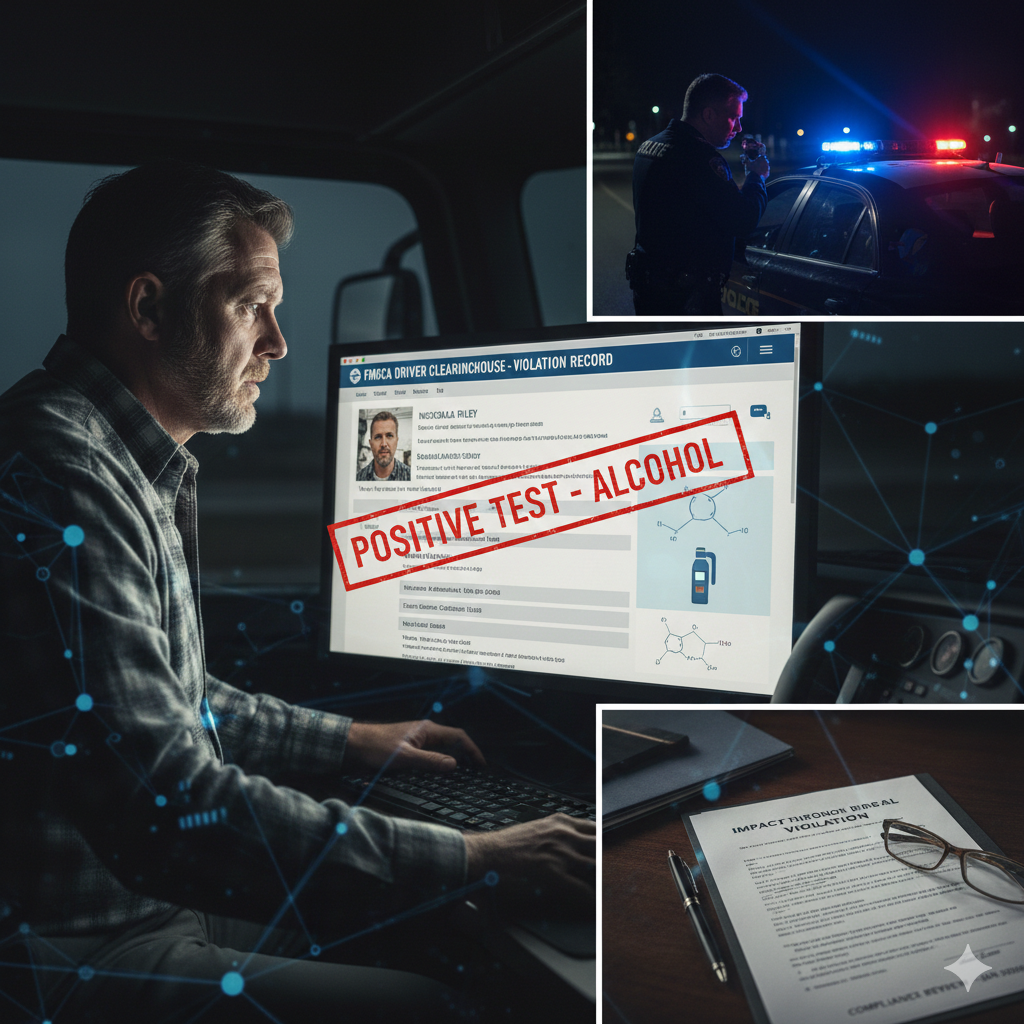
Also read our “Clearinghouse Tracking“ post. “Failing to check the Clearinghouse is a prime example of Negligent Hiring.”
FAQs
- Who would be responsible in case a truck driver is involved in an accident?
In case the driver of the truck is acting within the scope of employment, vicarious liability can be applied against the trucking company. The company may however not be liable in cases where the driver is off duty or doing personal activities.
- Is a trucking company liable to negligence of a truck driver?
Yes, in case the truck driver is engaged in job-related activities at the time of the accident, then there is a possibility that the company can be vicariously liable to negligent conduct by the driver. This entails offences such as speeding or distracted driving.
- What is the distinction in vicarious and direct liability in the case of trucking companies?
Vicarious liability is the one in which a company is held accountable to the actions of its employee in the line of his or her duty whereas direct liability is the one which a company carries out itself like negligent hiring or vehicle maintenance.
- Is the truck accident covered by the insurance of the driver?
Where the driver is personally liable, or out of duty when the accident occurs, his or her personal auto insurance may cover the loss. In any other case, the claims are usually taken care of by the commercial insurance of the trucking company in case the driver is working.
- Can a trucking company avoid the liability of truck accidents?
A trucking company will be able to avoid the liability in case the driver was not acting within the employment scope (e.g., when using the truck to do personal activities) or the accident was caused by something beyond the control of the company, e.g. vehicle sabotage.
Note: The content published on this blog is intended solely for informational and guidance purposes. We do not offer, promote, or provide any services through this website.